Chronic lower back pain can feel like an unsolvable puzzle, especially when standard treatments for lumbar discs or pinched nerves fail to provide relief. Many patients endure years of discomfort because the true source of their agony is located just a few inches below the spine. To find lasting relief, let’s explore the mechanics of the sacroiliac joint.
The Role of the Sacroiliac Joint in Stability
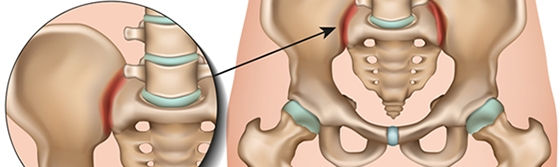
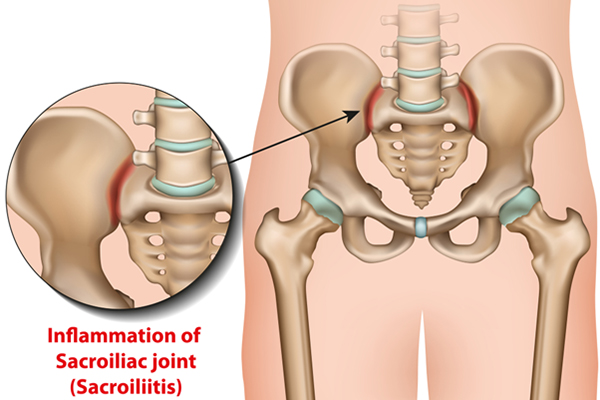
The sacroiliac (SI) joints serve as the critical link between your spine and your pelvis. These joints are responsible for transferring the weight of your upper body to your legs while acting as natural shock absorbers. Unlike the flexible joints in your neck or mid-back, the SI joints are designed for stability rather than significant movement. They are held together by a dense network of ligaments that provide the structural integrity needed for walking, running, and lifting.
Why SI Joint Dysfunction is Often Misdiagnosed
SI joint dysfunction is often mistaken for other causes of back pain. Because the pain often radiates into the buttocks, groin, and upper thighs, it is frequently mistaken for a herniated disc or sciatica. Statistics suggest that up to 25% of patients seeking treatment for chronic low back pain are actually suffering from SI joint issues rather than a primary spinal problem.1
Common causes of dysfunction include:
- Hypermobility: Ligaments become too loose, allowing for excessive, unstable movement.
- Hypomobility: The joint becomes "locked," leading to inflammation and stiff, localized pain.
- Trauma: Sudden impacts, such as a fall or a motor vehicle accident, can shear the joint surface.
- Pregnancy: Hormonal changes and shifts in gait can stress the pelvic ligaments.
Identifying the Root Cause of SI Joint Dysfunction
Diagnosing SI joint dysfunction requires more than just an MRI; it requires a physical examination using provocative maneuvers designed to stress the joint. If these tests reproduce your symptoms, the most definitive diagnostic tool is a guided SI joint injection. If a local anesthetic injected into the joint provides immediate, significant relief, we have confirmed the source of your distress.
Modern SI Joint Treatment Paths: From Conservative to Interventional
Treatment begins with non-surgical strategies aimed at stabilizing the pelvis. This typically includes specialized physical therapy to strengthen the "core" and pelvic floor, or the use of a sacroiliac belt to provide external support. For those who do not respond to conservative care, regenerative medicine or radiofrequency ablation may be used to quiet the nerves surrounding the joint.
In cases where the joint remains chronically unstable and conservative therapy has failed, minimally invasive SI joint fusion is a highly effective surgical option. A leading technology in this field is the iFuse Implant System®. This procedure involves placing small, triangular titanium implants across the joint to stop the painful micro-motion, allowing the bone to fuse and provide permanent stability. The triangular profile of the iFuse implants is specifically engineered to resist rotation and provide immediate structural integrity.
Restoring Your Quality of Life
Living with undiagnosed pelvic instability can be a grueling experience, but it is a condition that can be managed effectively with the right diagnostic approach. If your current back pain treatments have reached a plateau, it may be time to investigate the foundation of your spine. Scheduling a specialized evaluation can help determine if your SI joints are the missing piece of your recovery puzzle.
FAQs
1. What are the common symptoms of SI joint dysfunction?
Pain in the lower back, buttocks, or hips that may radiate into the groin or thighs, often worsening with prolonged sitting, standing, or transitions.
2. How is SI joint dysfunction different from sciatica?
While both can cause radiating pain, SI joint dysfunction originates in the pelvis, whereas sciatica is caused by irritation of the sciatic nerve in the lower spine.
3. Can SI joint dysfunction heal on its own?
Mild cases may improve with rest and physical therapy, but persistent symptoms often require targeted treatment to stabilize the joint.
4. What treatments are available for SI joint dysfunction?
Options range from physical therapy and bracing to injections, nerve ablation, and minimally invasive SI joint fusion in more severe cases.
5. Who is most at risk for SI joint dysfunction?
Athletes, pregnant individuals, and people with a history of trauma, uneven leg length, or prior spine surgery are at higher risk.
Reference Links:
AUTHOR: Payam Moazzaz, MD – Board-Certified & Fellowship-Trained Orthopedic Spine Surgeon
Payam Moazzaz, MD is a board-certified and fellowship-trained orthopedic spine surgeon specializing in the diagnosis and treatment of complex spine disorders. With over a decade of experience, he provides comprehensive care for conditions including spinal cord tumors, spinal infections, spinal deformities, spinal instability, sciatica, and degenerative spine disease. Practicing in San Diego, Dr. Moazzaz is dedicated to restoring mobility, reducing pain, and helping patients return to active, fulfilling lives.
Credentials & Leadership
Dr. Moazzaz is recognized as an industry leader in robotic spine surgery in California. He was among the first physicians in the United States to perform robotic spine surgery and has completed more robotic spinal procedures than any other surgeon in San Diego and throughout California. He has performed hundreds of robotic spine surgeries with excellent patient outcomes and regularly hosts visiting surgeons from across the United States and internationally to teach advanced robotic techniques.
Clinical Expertise
Dr. Moazzaz specializes in minimally invasive and robotic-assisted spine surgery, including spinal fusion, scoliosis correction, discectomy, laminectomy, spinal trauma surgery, and procedures addressing complex spinal instability. Using advanced 3D imaging and robotic guidance systems, he performs surgery through small incisions with enhanced precision, reduced tissue disruption, and optimized implant placement.
In addition to surgical care, Dr. Moazzaz offers a full spectrum of noninvasive and nonsurgical treatment options, including medication management, physical therapy, injections, and other specialty procedures. When conservative therapies are not effective, he carefully guides patients through advanced surgical options with a focus on safety, precision, and faster recovery.
Dr. Moazzaz’s philosophy centers on individualized treatment planning, patient education, and compassionate care. His goal is not only to relieve pain but to restore function and empower patients to resume work, recreation, and daily activities with confidence.
Medical Disclaimer: This information is for educational purposes only and does not constitute medical advice. For diagnosis and treatment recommendations, please consult with Dr. Moazzaz or another qualified spine specialist.